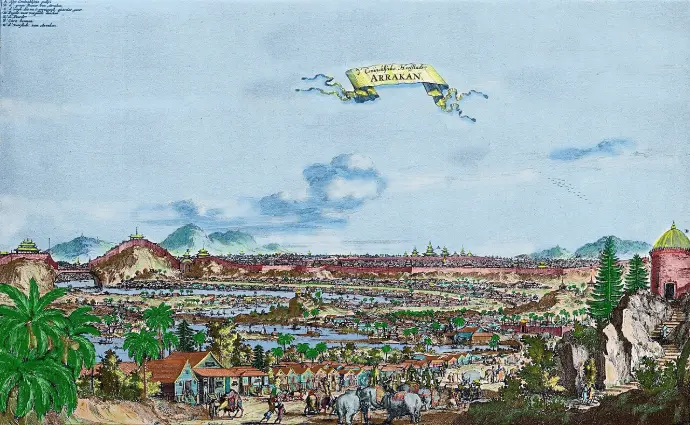
Rakhine (Arakan) – A Brief Overview
History
Rakhine State, formerly known as Arakan, is located in western Myanmar along the Bay of Bengal. It has a rich and complex history, once being home to the powerful Kingdom of Mrauk U (1430–1784), which thrived as a maritime trade hub connecting Myanmar, Bengal, and the Middle East. The region was annexed by the Burmese Konbaung Dynasty in 1784 and later came under British rule in 1826 after the First Anglo-Burmese War. It became part of independent Myanmar in 1948.""To learn more about history of Arakan (Rakhine)"
Culture
The culture of Rakhine is distinct from mainstream Burmese traditions, with influences from South Asia and Theravāda Buddhism. The Rakhine people, the dominant ethnic group, have unique customs, language, and traditions. Traditional Rakhine dance, music, and festivals, such as the Maha Muni Festival, showcase their cultural identity. The region is also home to a diverse population and made up of several ethnic groups, including the Rakhine, Kamein, Kwe Myi, Daingnet, Maramagyi, Mro, and Thet. The Rakhine are the majority ethnic group in Rakhine State.
Famous Heritage Sites & Tourist Attractions
- Mrauk U – The ancient capital of the Rakhine Kingdom, known for its stone pagodas and temples, such as Shittaung Pagoda and Htukkanthein Temple.
- Ngapali Beach A stunning white sand beach and one of Myanmar’s top tourist destinations.
- Maha Muni Buddha Image – A sacred Buddhist site believed to be one of the most venerated images of Buddha in Myanmar.
- Lampi Island Marine National Park – A biodiversity hotspot with mangroves, coral reefs, and rich marine life.
Educational Challenges
Rakhine faces significant educational challenges, including:
- Limited Infrastructure – Many schools lack proper facilities, teachers, and learning materials.
- Conflict and Displacement – Ethnic tensions and conflict have disrupted education, especially for minority groups.
- Economic Hardship – Poverty forces many children to drop out early to support their families.
- Limited Higher Education Opportunities – Few universities exist in Rakhine, leading students to migrate for higher education.